
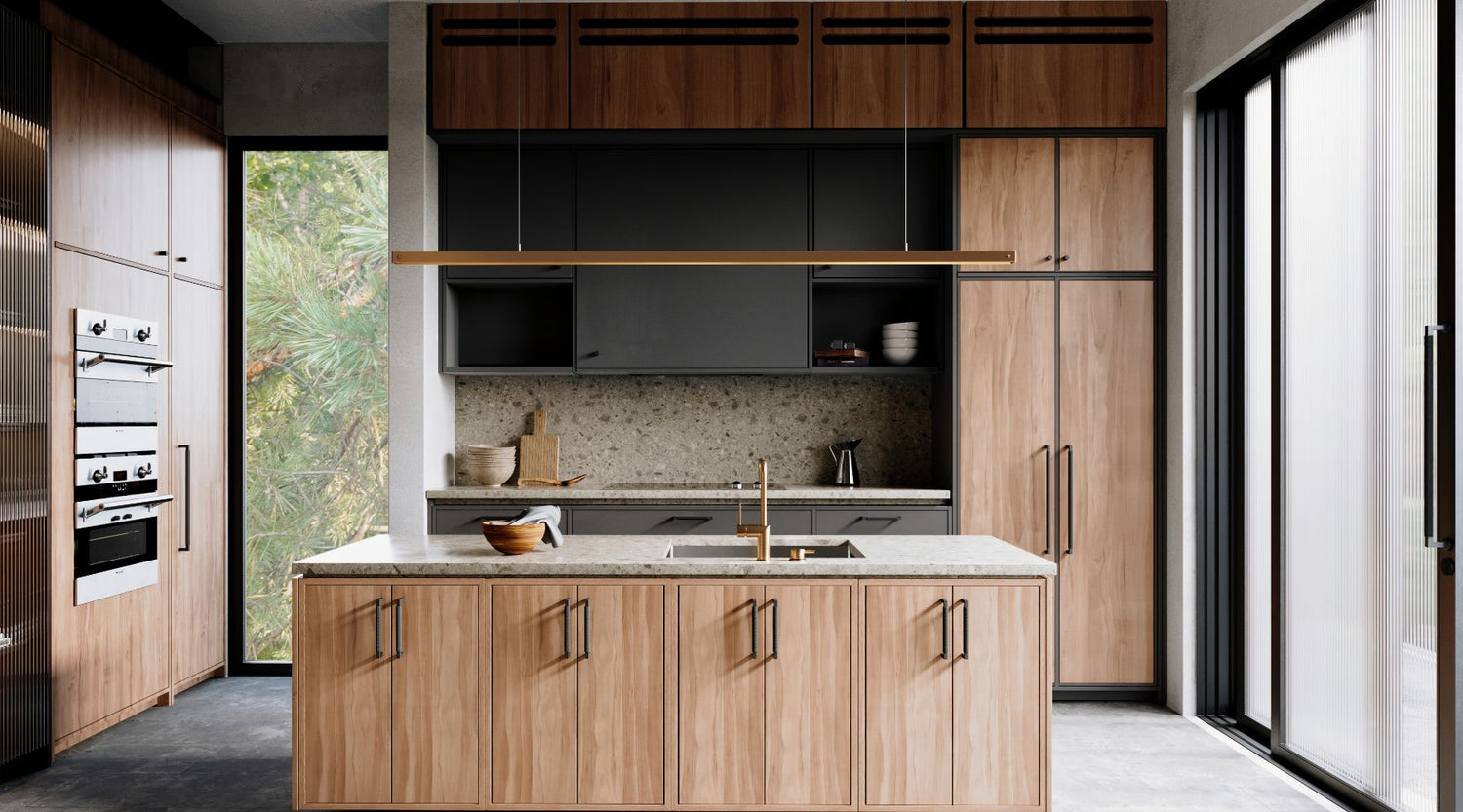
Modern kitchens are no longer just functional spaces — they’ve become a central part of how a home feels and functions day to day. The most resolved kitchens balance material, proportion, and detail in a way that feels effortless rather than overworked.
Whether you’re planning a renovation or refining smaller elements, these kitchen design ideas focus on what actually shapes a space — not just visually, but in how it’s experienced.
1. Statement Stone as a Focal Point
Natural stone continues to define the overall direction of a kitchen. Rather than blending in, it’s often used as a central feature — across benchtops, splashbacks, or full-height surfaces.
Materials with movement, such as heavily veined marble or quartzite, introduce depth without needing additional decoration. When used with restraint, they create a sense of structure that anchors the entire space.
To avoid visual overload, balance these surfaces with more subdued cabinetry and refined hardware finishes that don’t compete for attention.
2. Warmer Timber Tones
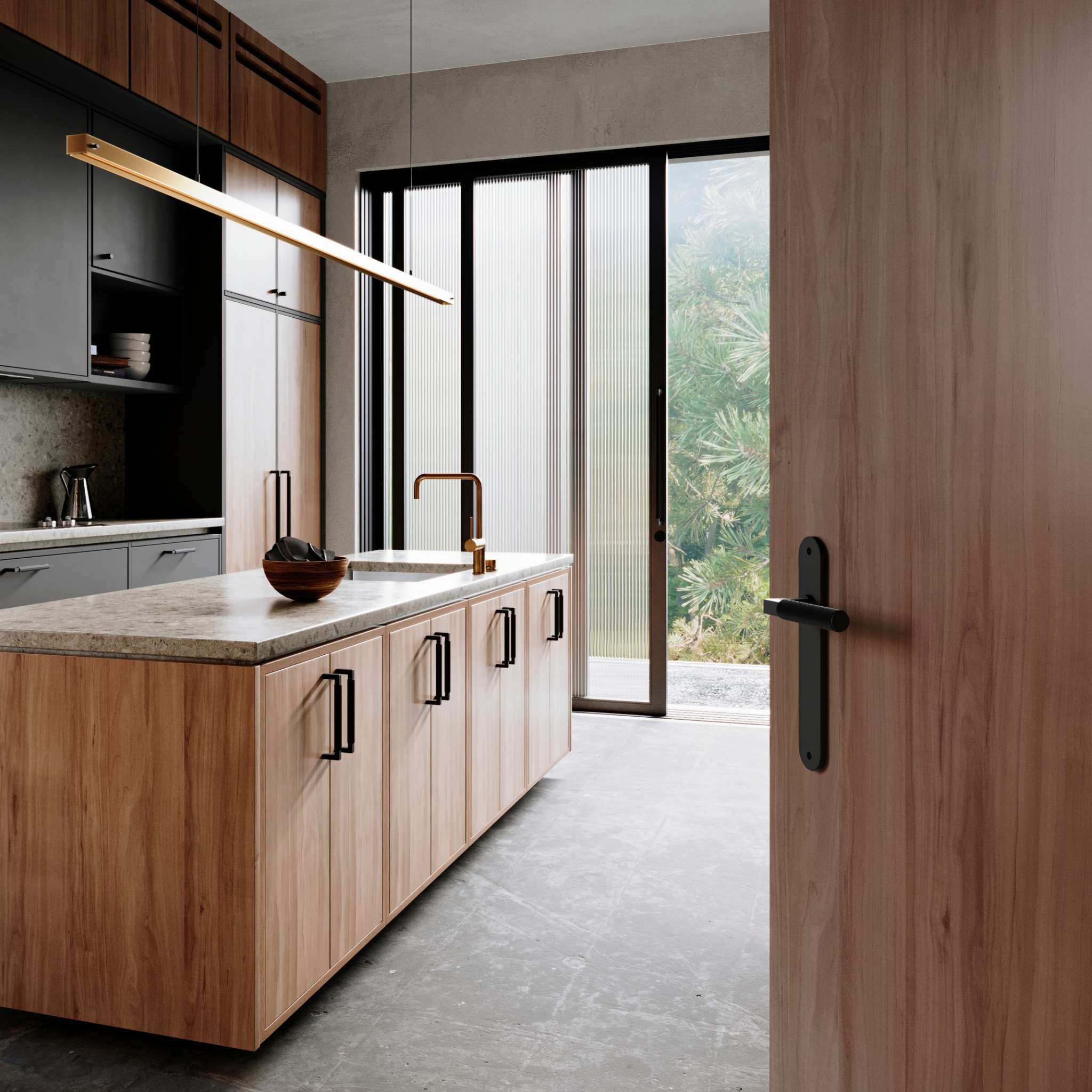
Timber has shifted toward deeper, more grounded tones. Walnut, dark oak, and stained finishes bring warmth that balances harder materials like stone and metal.
This works particularly well in open-plan kitchens, where the joinery needs to feel connected to adjacent living spaces. The result is a kitchen that feels integrated rather than separate.
Paired with the right door hardware, these tones create a more cohesive and settled palette.
3. Colour That Feels Considered
Colour is being used more deliberately — not as a feature, but as part of a broader material palette.
Deeper greens, muted blues, and earthy tones work best when they’re supported by natural materials. Rather than standing out, they sit within the space and contribute to a more layered, balanced result.
The key is restraint. When colour is used with intention, it feels integrated rather than dominant.
4. Softened Edges and Curved Forms
Kitchens are becoming less rigid in their geometry. Subtle curves — on island ends, joinery edges, or open shelving — soften the overall feel without changing the structure of the layout.
These details are particularly effective in kitchens with strong materials, where softer forms help balance harder surfaces like stone or metal.
Even small shifts in shape can change how a space is experienced.
5. Layered Materials and Finishes
A well-resolved kitchen rarely relies on a single material. Instead, it combines elements that contrast slightly while still feeling connected.
Common pairings include:
- natural stone with timber
- textured plaster with smooth joinery
- brushed brass with matt black accents
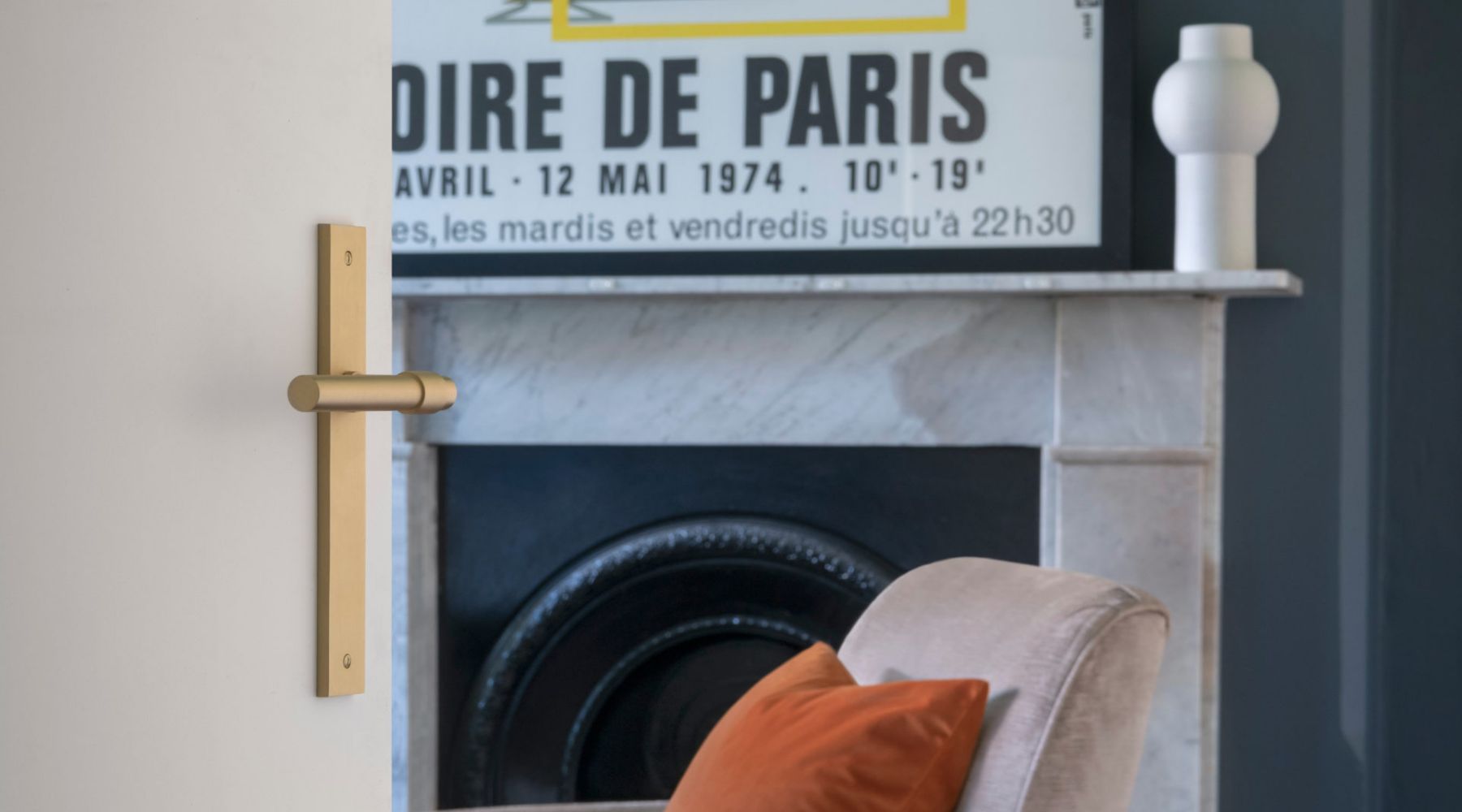
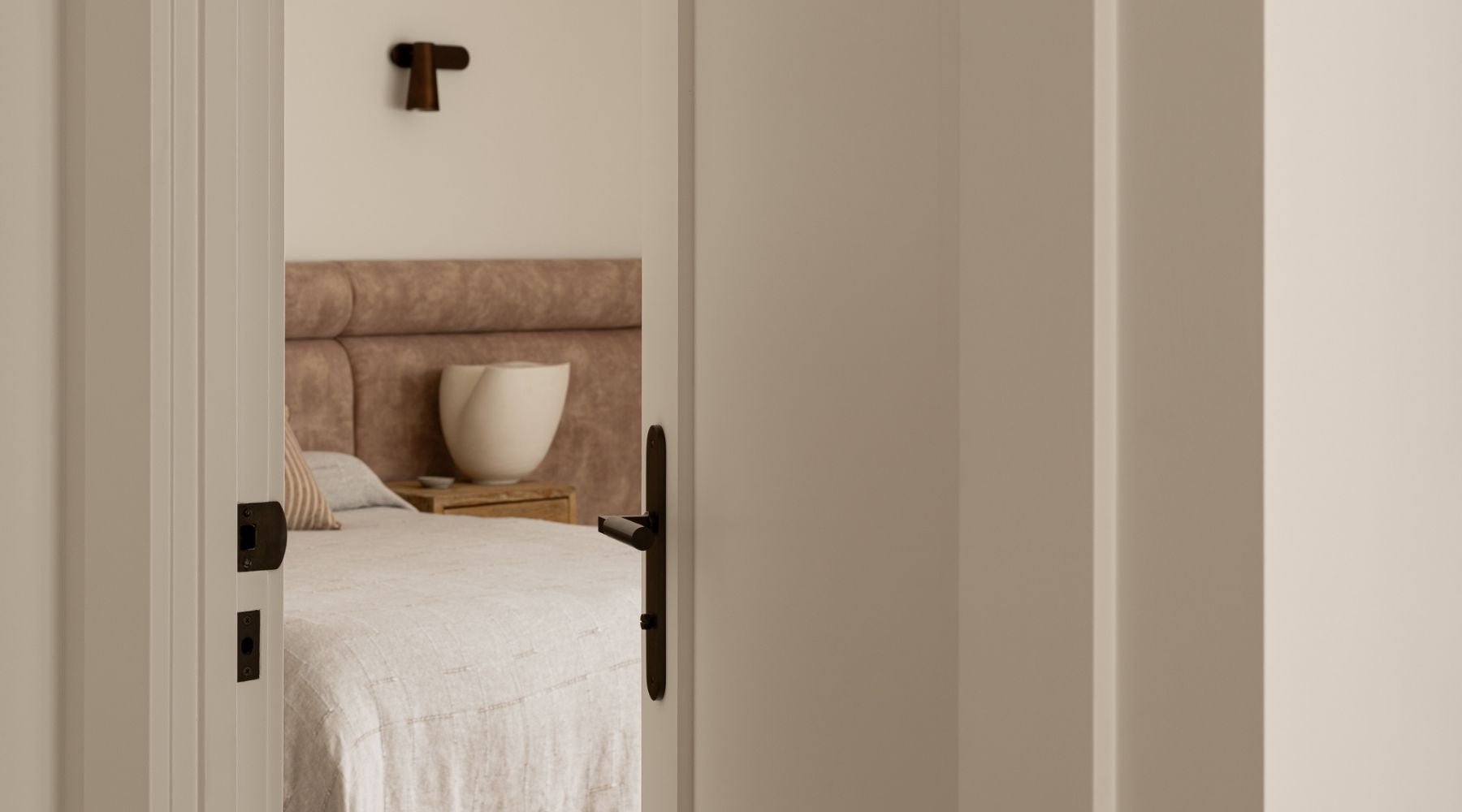
Hardware plays an important role here. Door levers, in particular, carry through to adjacent spaces, so their finish should sit comfortably within the broader palette.
If you're working through these combinations, our guide to Door Hardware Finishes: A Complete Guide to Choosing the Right Look breaks down how different finishes behave across a home.
6. Islands Designed for Everyday Use
The kitchen island has become more than a preparation space. It’s often where people gather, work, and move through the day.
Designing for this means considering:
- seating and circulation
- changes in height or depth
- how materials transition across surfaces
A well-designed island feels natural to use, not just good to look at.
7. Integrated Storage and Reduced Visual Clutter
Kitchens that feel calm tend to minimise visual interruption. Integrated appliances, concealed storage, and simplified joinery all contribute to this.
The goal isn’t minimalism for its own sake, but clarity. When surfaces are uninterrupted, materials and finishes can be appreciated properly.
This is where consistency matters — particularly with hardware. Keeping finishes aligned across doors and adjacent rooms helps maintain that sense of cohesion.
8. Finishes That Work Beyond the Kitchen
The most successful kitchens don’t feel isolated — they connect to the rest of the home.
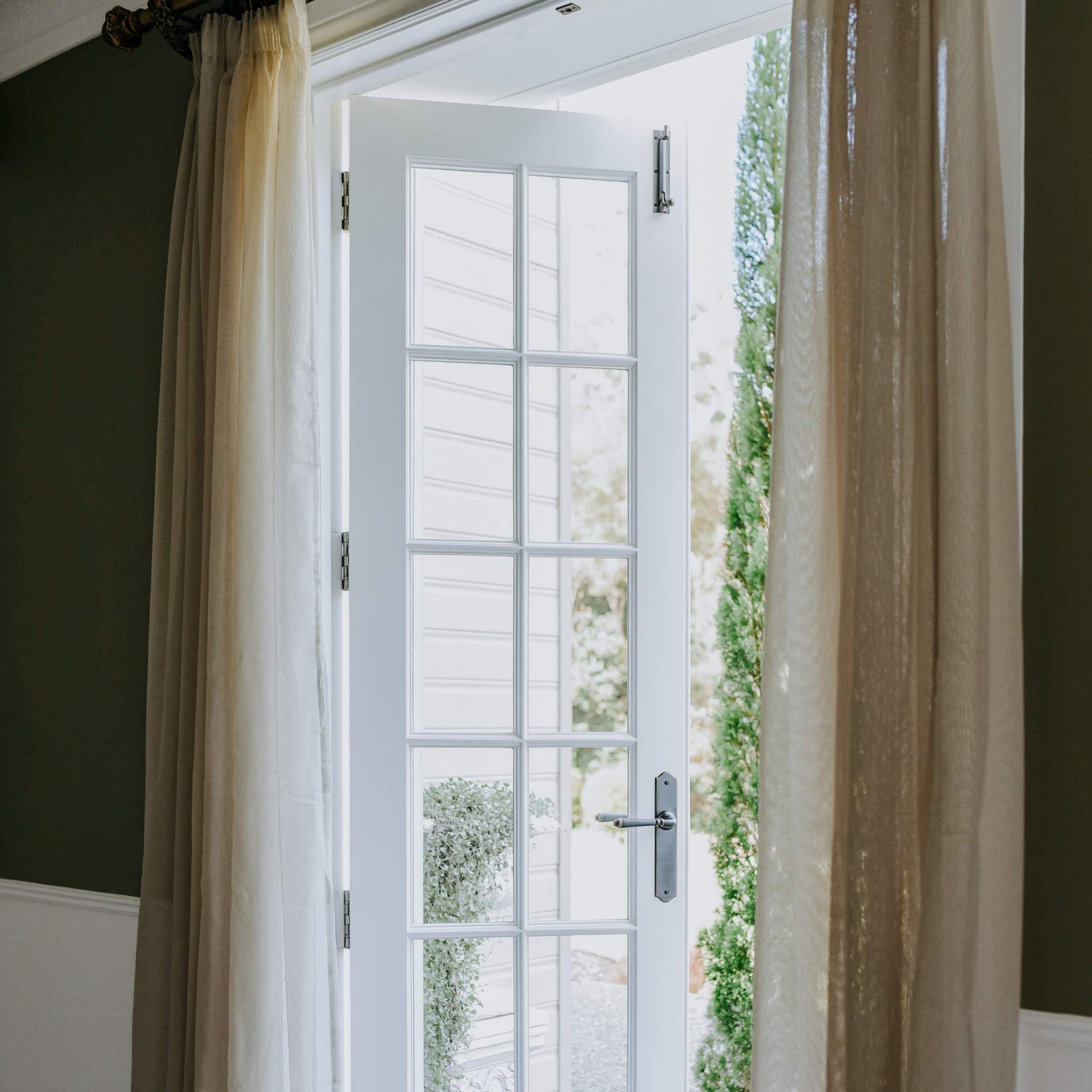
Choosing hardware finishes that carry through to doors, hallways, and adjoining spaces helps achieve this. It creates a consistent visual thread, even as materials and layouts change.
If you’re deciding between warmer or more defined finishes, you might find it useful to compare:
These differences become more noticeable as finishes repeat throughout a home.
A Finish That Feels Right
Small details shape how a space comes together. When the finish, form, and function align, it creates a sense of clarity that carries through the entire home.
Small details make the strongest impression — especially when they’re chosen well.
Explore Door Lever Finishes
If you're refining your selections, explore our range of:
Brass Door Levers
Black Door Levers
Nickel Door Levers
Chrome Door Levers